A series within the Vienna Essays about signs, spaces, rituals, and layers of cultural meaning.
Vienna as a Symbolic World: Why Place Carries Memory
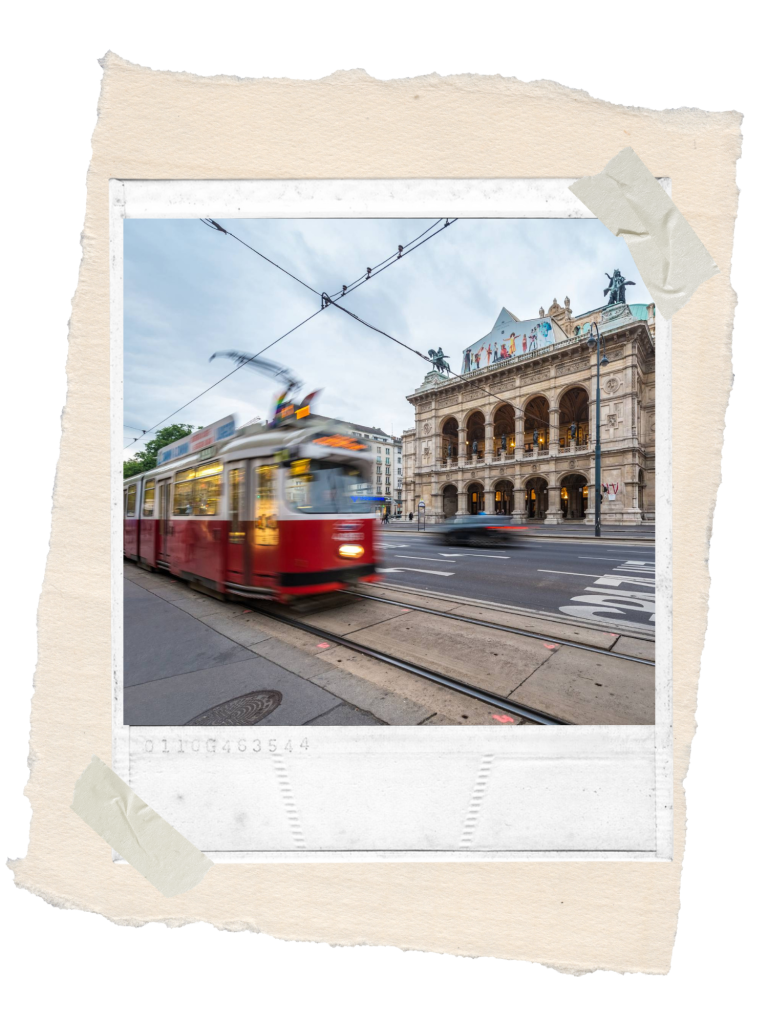
Symbolic travel through Vienna: Beneath its tram lines, coffeehouses, concert halls, squares, and palace gardens lies a deeper world of memory, habit, history, and belonging.
This essay is part of the emerging Symbolic Vienna series, a way of exploring Vienna through visible motifs, lived memory, cultural codes, and the deeper meanings places carry.
Vienna as a Symbolic World: Why Place Carries Memory
There are cities designed to open outwards, inviting urban exploration. Others have gathered enough memory to become inward landscapes, places that ask us to read not only the streets, but ourselves.
Vienna belongs to the second kind.
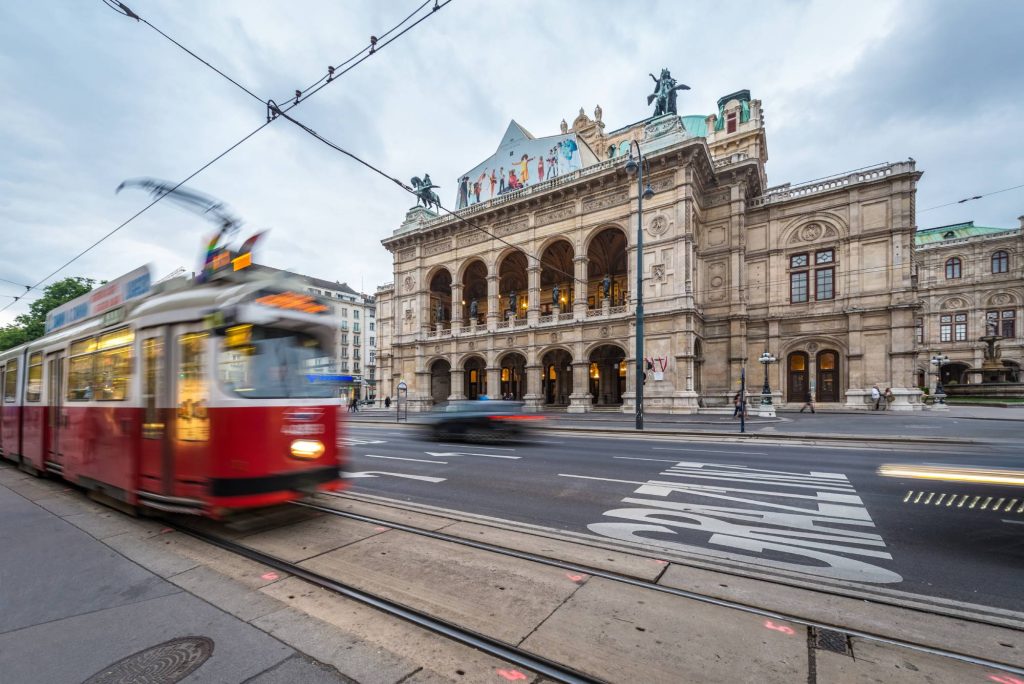
It begins with recognizable motifs, because motifs are easy to see. A tram line curving around the Ring. A coffee cup placed with careful ceremony on a marble table. A façade whose beauty hides a private courtyard. A garden path clipped into obedience by centuries of hands. The golden shimmer of the Musikverein before the first note has sounded.
At first, these things appear simple enough. They are visible. Nameable. Photogenic. Easy to place on an itinerary and pass from one traveler to another as proof that Vienna has been seen.
But Vienna is not held at first glance.
Each motif has several lives. The visitor sees the image. The resident feels the rhythm. The native Viennese reads the code. History presses from underneath. And somewhere deeper still, the motif begins to stir something less easily named: memory, longing, unease, belonging, recognition.
That is where Vienna stops being scenery and becomes symbolic.
Vienna is not held at first glance.
The tram line: when Vienna stopped circling itself
Take the tram line, for example.
To the visitor, it may first appear as one of Vienna’s most charming forms of movement: red carriages gliding past imperial façades, curving along the Ring, offering the city as a moving postcard. You sit, you look, you pass the Opera, the Parliament, the Burgtheater, the University, and for a moment, Vienna seems almost too generous with itself.
But when I first arrived in Vienna, the tram was not only transport. The old lines 1 and 2 moved around the inner city in opposite directions, circling the Ring in perpetual motion. They were practical, yes, but they were also strangely ceremonial. Two moving rings. Two urban ouroboroi. One clockwise, one counterclockwise, holding the old center in place.
In a city where the monarchy was long gone but never entirely absent, those trams seemed to perform a kind of secular guarding ritual. They had replaced the city walls in motion. Where stone had once protected the inner city, rhythm now did. The trams circled and circled, maintaining the illusion that Vienna could change and still remain enclosed within itself.
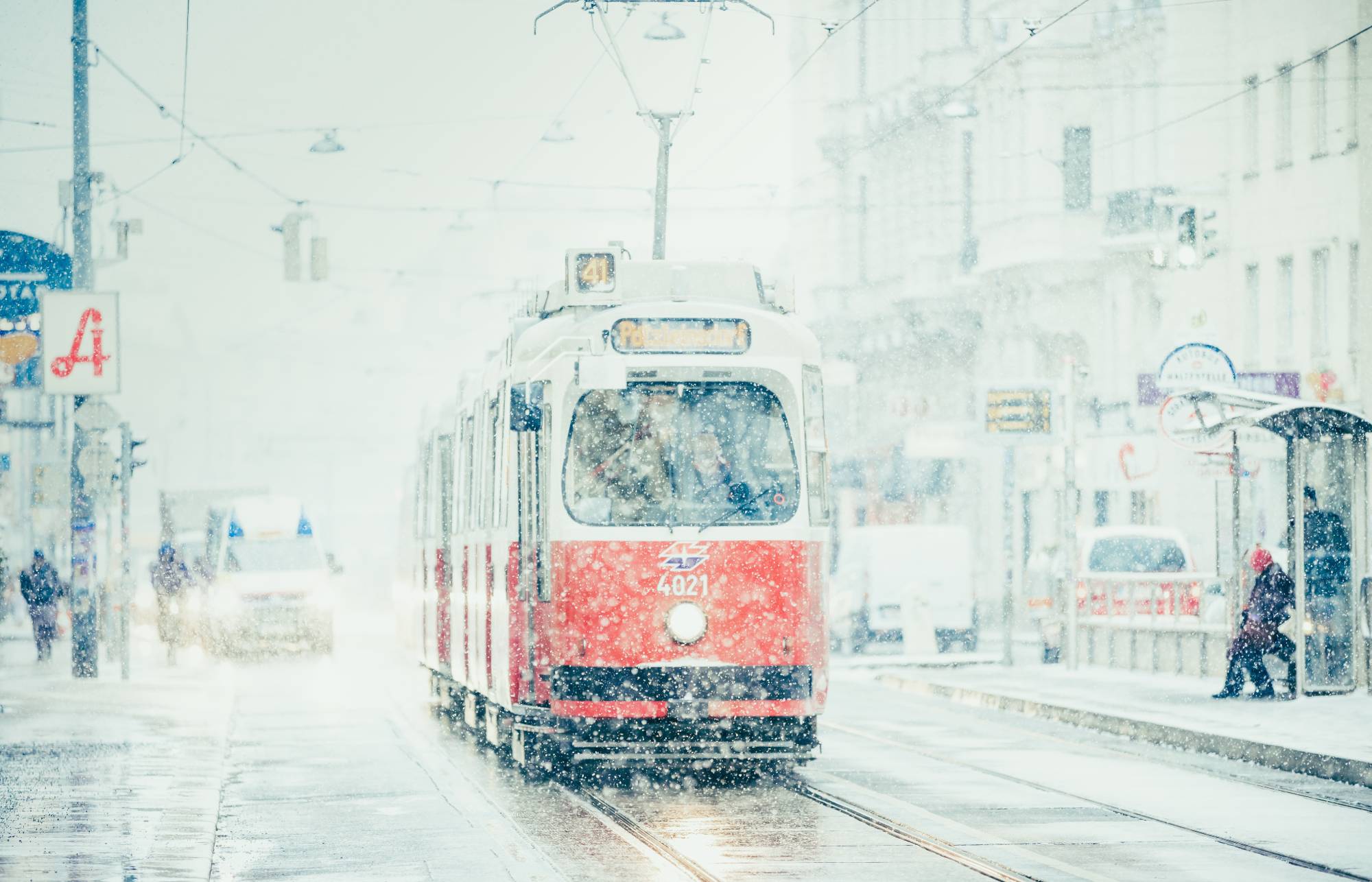
Then, in 2008, the unthinkable happened. The 1 and the 2 left their inherited routes. The loops were broken. The lines moved outward, crossing into other districts, carrying the Ring with them into a different urban logic.
On paper, it was a transport reform. A practical redesign. A more modern connection between districts.
But cities are not made of paper.
For me, the change did not remain theoretical. Before then, I had used those trams constantly, moving from one teaching appointment to another, crossing the city by rhythm as much as by route. Sometimes I took them simply to slow down. A friend once told me, shortly after I arrived, “Vienna is a great place to chill. You’ll discover a lot about yourself. It’s no wonder Freud started here.” The old Ring trams had that quality. They allowed the city to move while one stayed briefly suspended inside it.
For me, the change did not remain theoretical. Before then, I had used those trams constantly, moving from one teaching appointment to another, crossing the city by rhythm as much as by route. Sometimes I took them simply to slow down. A friend once told me, shortly after I arrived, “Vienna is a great place to chill. You’ll discover a lot about yourself. It’s no wonder Freud started here.” The old Ring trams had that quality. They allowed the city to move while one stayed briefly suspended inside it.
For me, the change did not remain theoretical. Before then, I had used those trams constantly, moving from one teaching appointment to another, crossing the city by rhythm as much as by route. Sometimes I took them simply to slow down. A friend once told me, shortly after I arrived, “Vienna is a great place to chill. You’ll discover a lot about yourself. It’s no wonder Freud started here.” The old Ring trams had that quality. They allowed the city to move while one stayed briefly suspended inside it.
I remember reading about the change in the newspaper and feeling dismayed in a way that was not entirely practical. Of course, the new routes made sense on paper. Lines could move outward, connect districts more efficiently, behave like a modern transport system instead of a ceremonial ring. But the old 1 and 2 had done something no journey planner could reproduce. They gave locals, commuters, visitors, and accidental flâneurs a continuous, inexpensive way to circle the centre, to understand the Ring not as a list of stops but as a held shape.
When that disappeared, confusion followed. Which side of the street? Which tram? Which direction? And then came the yellow Vienna Ring Tram, a paid tourist substitute that never felt, to me, like a replacement. It was too deliberate, too packaged, too aware of itself. The old trams had simply done what Vienna used to do so well: they allowed grandeur to remain part of ordinary life.
For many people, it felt like the end of something. The reaction was not only irritation. It was symbolic exposure. Vienna suddenly felt more modern, yes, but also less protected. Over time, the centre began to feel different to me as well. Small shops gave way to more international labels, to the familiar sameness of Zara, H&M, Starbucks, Coffee Bean, and portable coffee cups moving through streets where lingering had once felt like a civic art form. We retreated more and more toward Hietzing. The inner city, once encircled, began to feel surrendered to crowds.
Not because a tram route is sacred in itself, but because certain forms of repetition become emotional architecture. They tell a city what it is allowed to remain. When the trams stopped circling the centre, Vienna did not simply become easier to cross. It became more open, more exposed, more porous. Whether that was liberation or loss depended very much on who was speaking.
I understood both arguments. I simply knew which one I felt.
That is how a tram becomes more than a tram. First, it is a tourist motif. Then it is a resident’s route. Then it becomes a Viennese code. Then a trace of the vanished city walls. And finally, if one has lived long enough with its rhythm, it becomes a symbol of rupture: the moment a city stops circling itself and begins, willingly or not, to open.
But cities are not made of paper.
The coffeehouse: where welcome rearranged the table
The coffeehouse enters differently.
To the visitor, it may first appear as one of Vienna’s most recognisable rituals: marble tables, small trays, silver spoons, newspapers, cake, the elegant permission to remain seated longer than seems commercially reasonable. You order a Melange, perhaps a slice of something layered and difficult to pronounce, and for a moment the city appears to have arranged itself around the art of lingering.
But when I first arrived in Vienna, the coffeehouse was not yet a ritual. It was a shelter.
I arrived on a cold, grey December morning in 1991. The sky was the colour of dishwater, and the city felt as if someone had turned the contrast down. Nothing shimmered. No one smiled. I felt as if I had stepped into a city whose weather, language, and mood had all closed around me at once.
On one of those early days, I stepped into Café Hawelka.
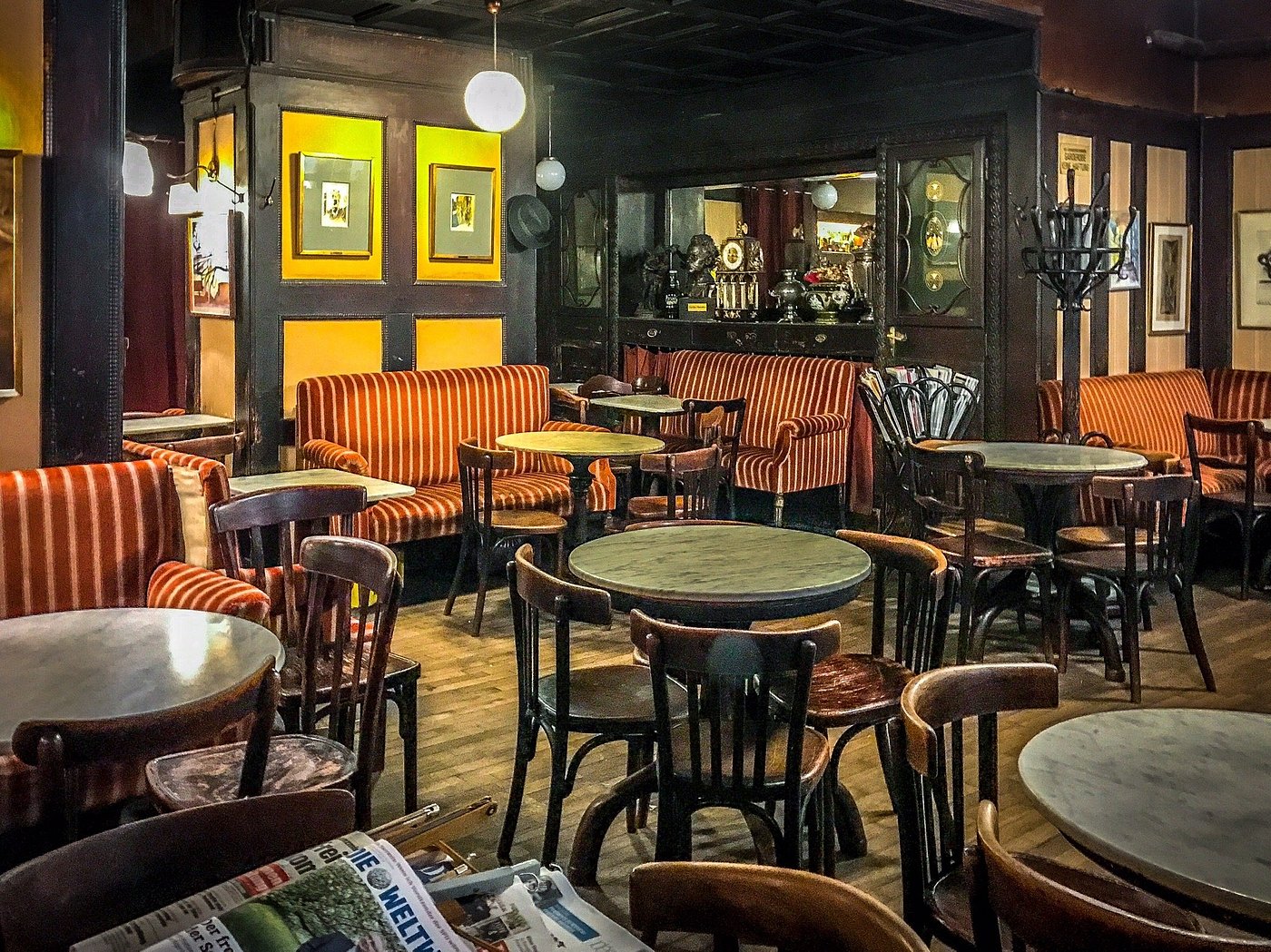
I had heard whispers of its late-night Buchteln and artistic past. The air was heavy with smoke and time. The tables were worn and familiar in a way I had not yet earned. I sat at a small window seat, trying to disappear.
Mr Hawelka approached to take my order, but before he could speak, his wife waved him off.
“She’s sitting at the wrong table,” she declared.
I looked around, confused. This was not Café Central. There was no maître d’. What could it possibly mean to be sitting at the wrong table?
Without hesitation, she pointed to another table. A young man sat there, alone.
“That’s much better for you,” she said.
Then, to him: “Speak to the young lady. You look far too lonely.”
And just like that, Frau Hawelka had decided our fate.
It turned out she was right.
That chance encounter was the first time I felt truly welcomed in Vienna. Not by policy. Not by politeness. Not by the official friendliness of a place trying to be pleasant to newcomers. It was something older, sharper, more instinctive: the social intelligence of a woman who saw two strangers more clearly than they saw themselves.
That is how a coffeehouse becomes more than a coffeehouse. The visitor may see ritual: marble tables, newspapers, Melange, cake, the elegant right to linger. But lived from the inside, the coffeehouse becomes something less decorative and far more exacting. It is refuge, theatre, social code, observation post, and sometimes intervention. Historically, it carries brilliance and absence together: writers, artists, arguments, newspapers, exile, vanished worlds.
For me, Hawelka became the place where Vienna first offered welcome. Not the soft, decorative kind. The kind that rearranges the table and decides, before you do, that you belong somewhere else.
In the Golden Hall, one does not simply hear the orchestra. One sits inside the music.
The Musikverein: sitting inside the music
The Musikverein adds another layer.
To the visitor, the Golden Hall may first appear as another grand Viennese interior: gold, chandeliers, columns, ornament, ceremony. Another room to admire. Another proof that Vienna knows how to stage culture with almost unreasonable confidence.
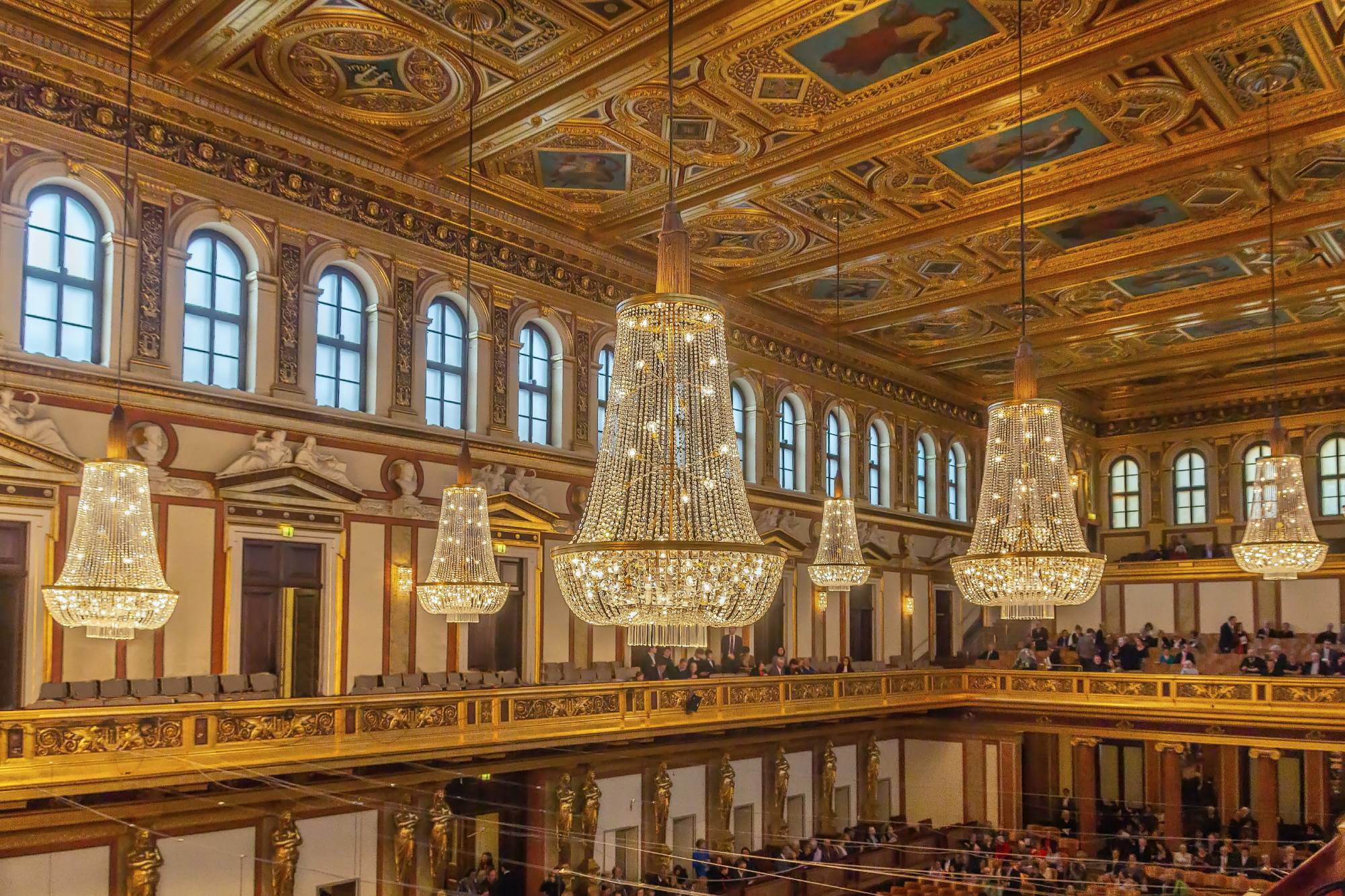
But the Musikverein is not only a concert hall.
My own entry into one of its Sunday afternoon performances came through one of those almost invisible Viennese doors. I was teaching English to a doctor who worked with Doctors Without Borders and came from a family with deep ties to the classical music world. He had access to one of those Sunday concert cycles but was away during that period. Knowing how much I loved music, he offered the tickets to my husband and me.
My own entry into one of its Sunday afternoon performances came through one of those almost invisible Viennese doors. I was teaching English to a doctor who worked with Doctors Without Borders and came from a family with deep ties to the classical music world. He had access to one of those Sunday concert cycles but was away during that period. Knowing how much I loved music, he offered the tickets to my husband and me.
That is how we were able to attend.
Not because I had simply decided to buy two tickets, but because someone else could not go and chose to pass the place, briefly, into our hands.
That matters, because in Vienna certain cultural experiences are not only events. They are lines of continuity. Sunday subscriptions at the Musikverein are not always freely available to whoever suddenly wants one. Often they are kept for years, sometimes passed through families, protected with quiet loyalty. One waits for a place to become available. It rarely does.
So when I sat there, I was aware that we had not simply entered a concert hall. We had stepped into a rhythm that belonged to other people’s lives: their Sundays, their families, their habits, their inherited listening.
Later, at a performance of Peter and the Wolf, I saw that inheritance being prepared in the next generation. The hall was full of children. They were there with parents and grandparents, sometimes whole families together. The children were well dressed, alert, full of anticipation. This was not only an outing. It was a form of initiation, though not in a stiff or ceremonial sense. They were being brought into a world their families already understood: a world in which music required attention, silence, patience, and a certain reverence for what was about to unfold.
The concertmaster explained that each instrument represented a character in the story, so the children, and perhaps also the visitor or the unschooled listener, could begin to follow how music speaks. The bird, the duck, the cat, the grandfather, the wolf: each had a voice. Each voice belonged to an instrument. Through the story, the children were not only entertained. They were being shown that music has structure, character, tension, and meaning.
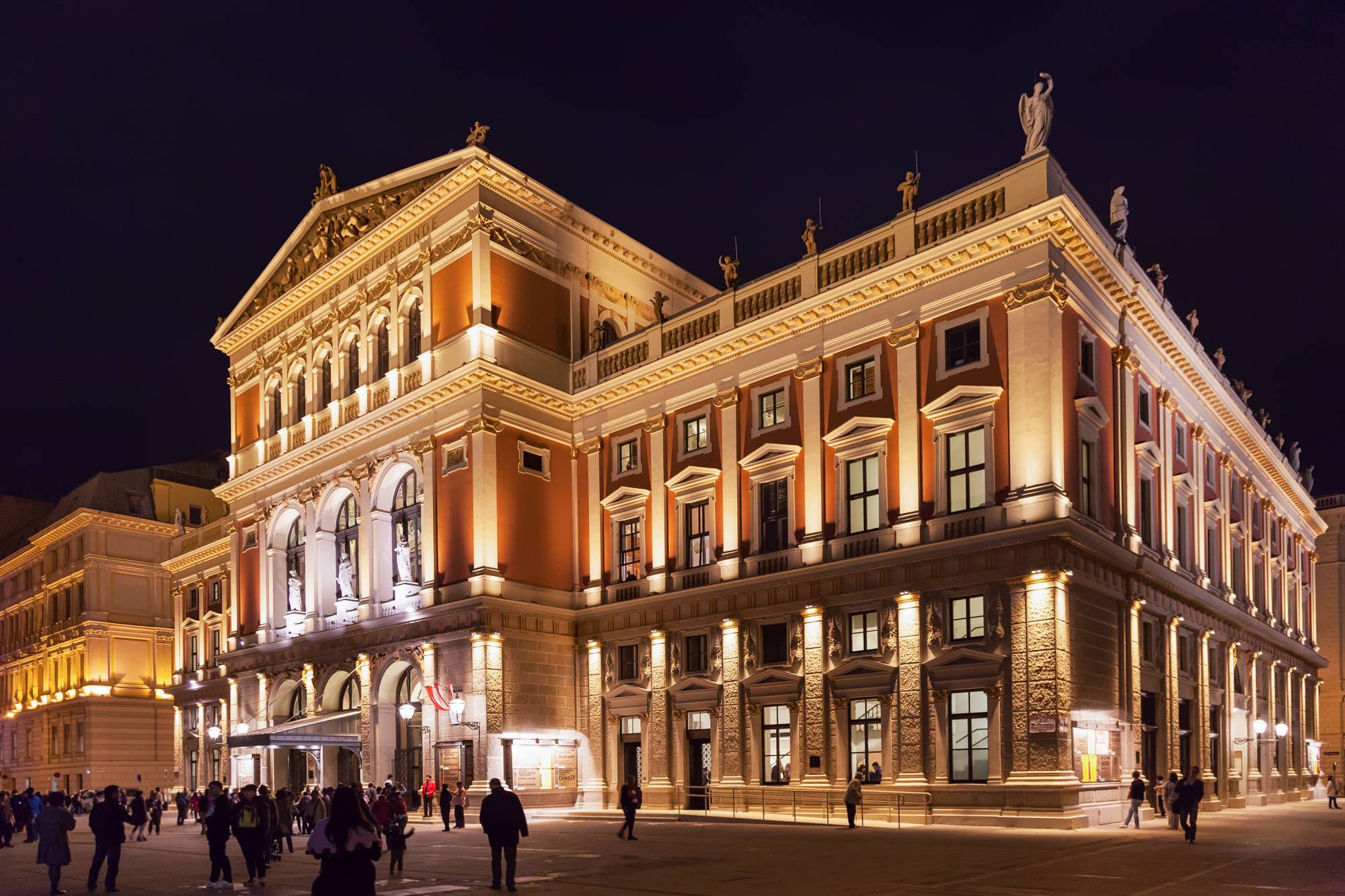
The Musikverein does not reveal its meaning all at once. The visitor sees the gold. The resident recognises the institution. The Viennese family may carry it as inheritance: seats held, subscriptions guarded, children introduced to listening before they fully understand what they are receiving. Historically, it carries the nineteenth-century belief that culture could be built into civic life.
But the deepest layer is physical.
If one has truly listened there, the room begins to dissolve the boundary between body, sound, architecture, and city.
The first time I attended a concert in the Golden Hall, I understood this with my body before I could explain it with words. Music was not simply being performed in front of me. It was happening around me, through me, almost inside me. The building did not feel like a container for sound. It felt like part of the instrument.
The sound does not stay politely on the stage. It moves through the hall, gathers warmth from wood, depth from proportion, shimmer from ornament, and returns to the listener as something almost physical.
In the Golden Hall, one does not simply hear the orchestra.
One sits inside the music.
Michaelerplatz: where Vienna’s centuries face each other
Then there is Michaelerplatz, which almost refuses to be interpreted quietly.
Some places in Vienna reveal their layers slowly. Michaelerplatz does the opposite. It places them in open confrontation and lets them stand there without apology.
To the visitor, it may first appear as one of those beautiful central squares that Vienna seems to produce with irritating ease: the curve of the Hofburg, the entrance to imperial power, the church, the horse carriages, the polished rhythm of people moving between history and coffee. It is photogenic from almost every angle, which is useful, but also slightly misleading.
Because Michaelerplatz is not simply beautiful.
It is an architectural argument.
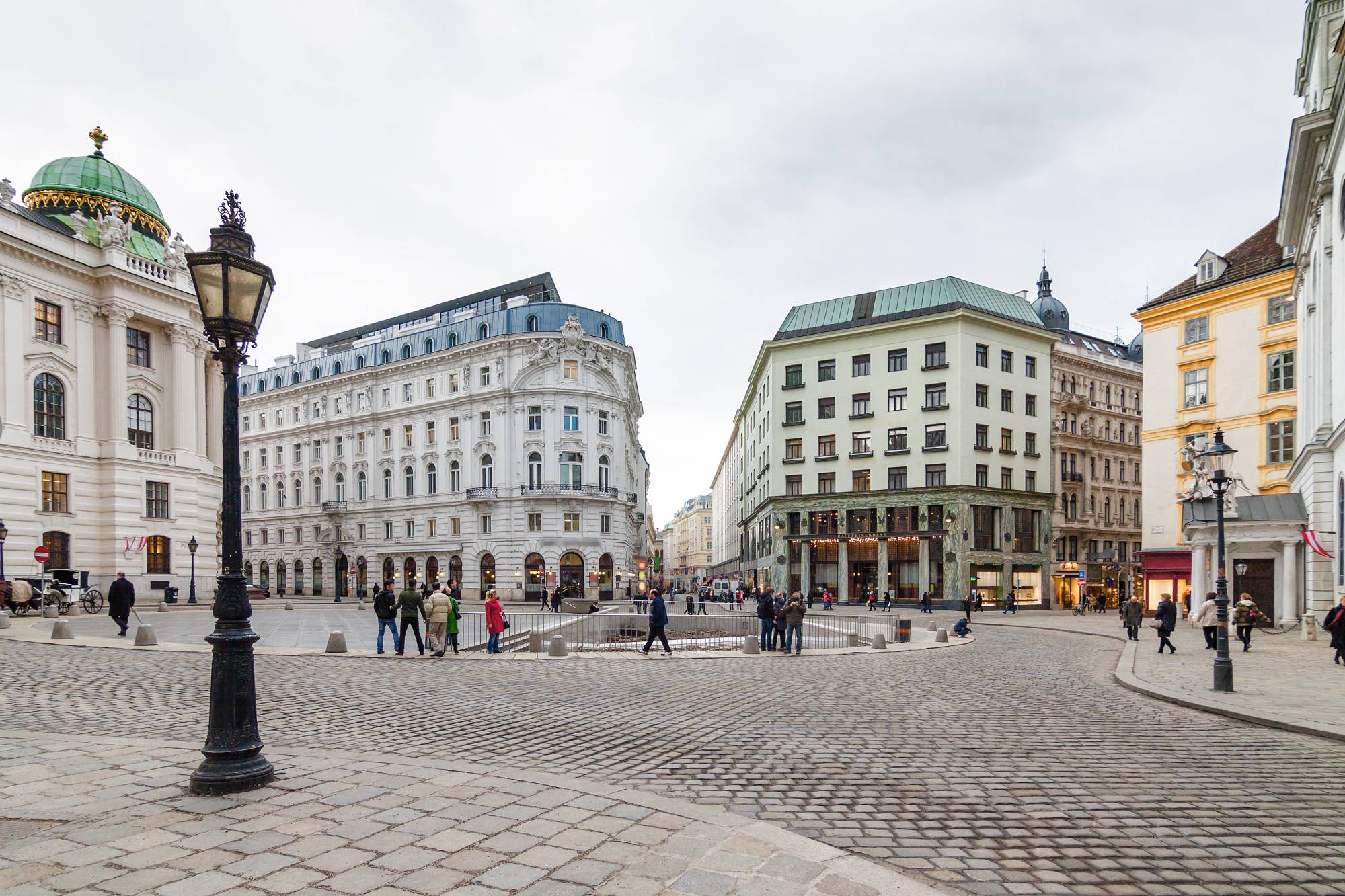
At its center, the exposed Roman ruins of Vindobona interrupt the paving. They are raw, low, functional, almost modest. They remind you that before the imperial city, before the baroque theatre, before the façades and coffeehouses and carefully managed grandeur, there was settlement, utility, road, foundation.
Beside them stands the Michaelerkirche, one of Vienna’s oldest churches, carrying the vertical reach of the medieval city. Across from it, the Hofburg opens itself with theatrical baroque confidence: symmetry, curve, sculpture, power, imperial self-belief turned into stone. And then, directly opposite this world of ornament and authority, the Looshaus stands with almost stubborn restraint.
No excess. No decorative obedience. No attempt to flatter the old order.
The Hofburg performs inherited power. The Looshaus answers with modernity. Baroque looks at early modernism. Empire faces the industrial age. Ornament faces refusal.
And all of this happens in one square.
That is why Michaelerplatz has always mattered to me. It does not explain Vienna’s layers. It stages them.
But for me, the square also carries something more personal.
Café Griensteidl stood there, and for a time it was one of my own doors into Vienna. It was where I would meet the man who would become my first husband when we were first dating. He worked in the pharmaceutical industry, and Griensteidl became one of those places where a relationship begins to attach itself to a city. We would meet there. I became a regular there. They knew me by name.
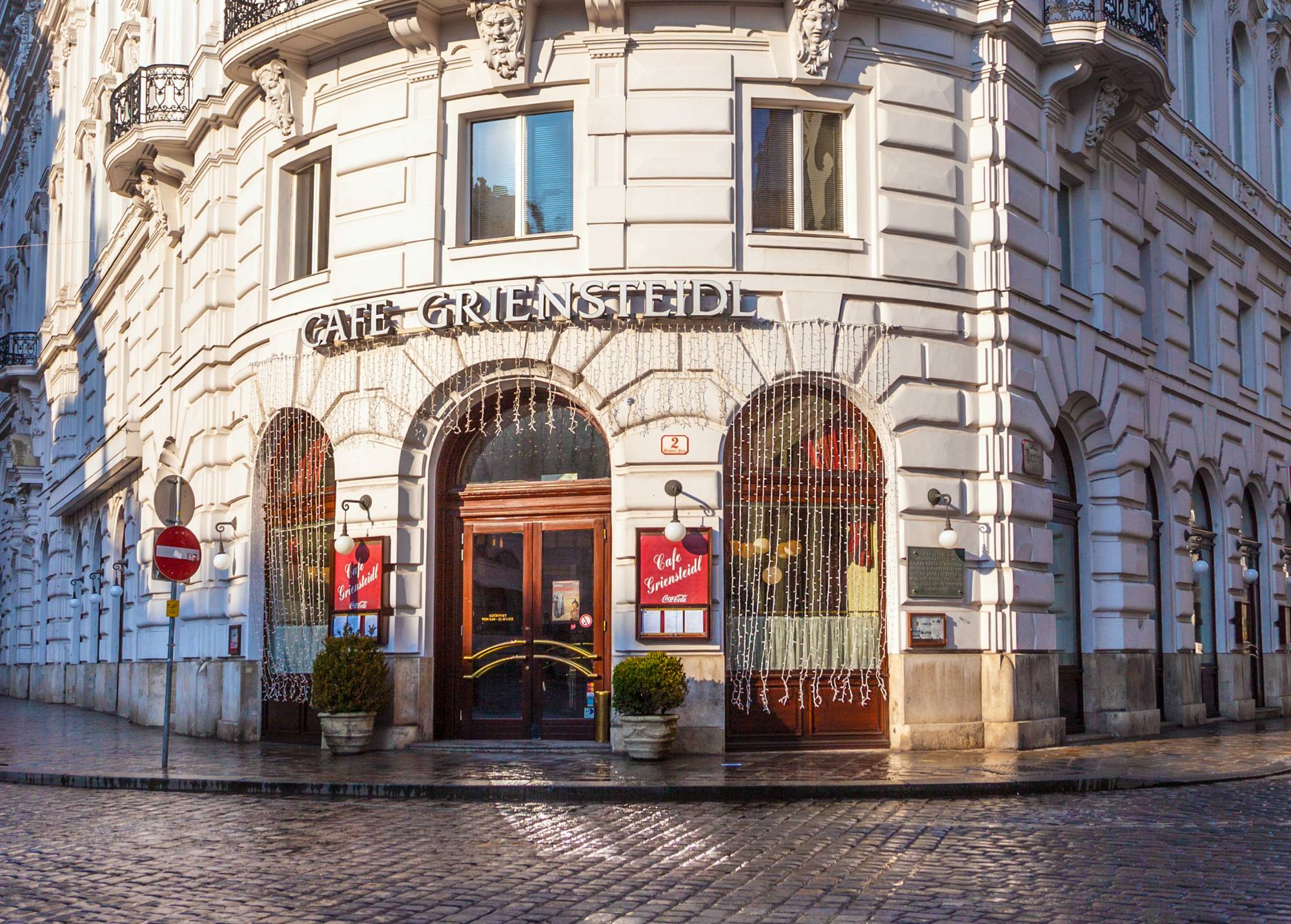
That matters, because being known by name in Vienna is not nothing.
It is one thing to admire the city from the outside. It is another to enter a room often enough that the room begins to recognise you. A café becomes part of your map not because it is famous, although Griensteidl certainly was, but because your own life begins to happen there.
Historically, Café Griensteidl had already carried more than one life. Founded in the nineteenth century, it became one of the great literary coffeehouses of Vienna, associated with Jung Wien, Arthur Schnitzler, Hugo von Hofmannsthal, Karl Kraus, and the birth of coffeehouse literature. Its original incarnation disappeared when the building was demolished in the late nineteenth century. Later it returned, revived in the same square, carrying the echo of what it had once been.
And then, eventually, it disappeared again.
Today, the old café space is no longer Griensteidl. It became a supermarket, dressed with traces of coffeehouse memory but no longer able to be what it was. That transformation is very Vienna in its own way: preservation, replacement, homage, commerce, loss, all standing politely in the same room and pretending not to notice each other too much.
Michaelerplatz works because it refuses to separate what Vienna so often keeps layered. A visitor may see a magnificent square. A resident may use it as a crossing point, a meeting place, an address, a habit. But the longer one stands there, the more the square becomes a compressed field of cultural argument: Roman settlement underfoot, medieval faith beside it, imperial theatre curving across it, modernist rupture facing power without apology, and the echo of a literary coffeehouse replaced by something more useful and less alive.
That is what Michaelerplatz does so well. It places contradiction in full view. It lets memory and modernity stare at each other across the square. It does not resolve the tension.
It simply asks you to stand there and feel it.
Schönbrunn: when a palace becomes your backyard
Schönbrunn is a different story altogether.
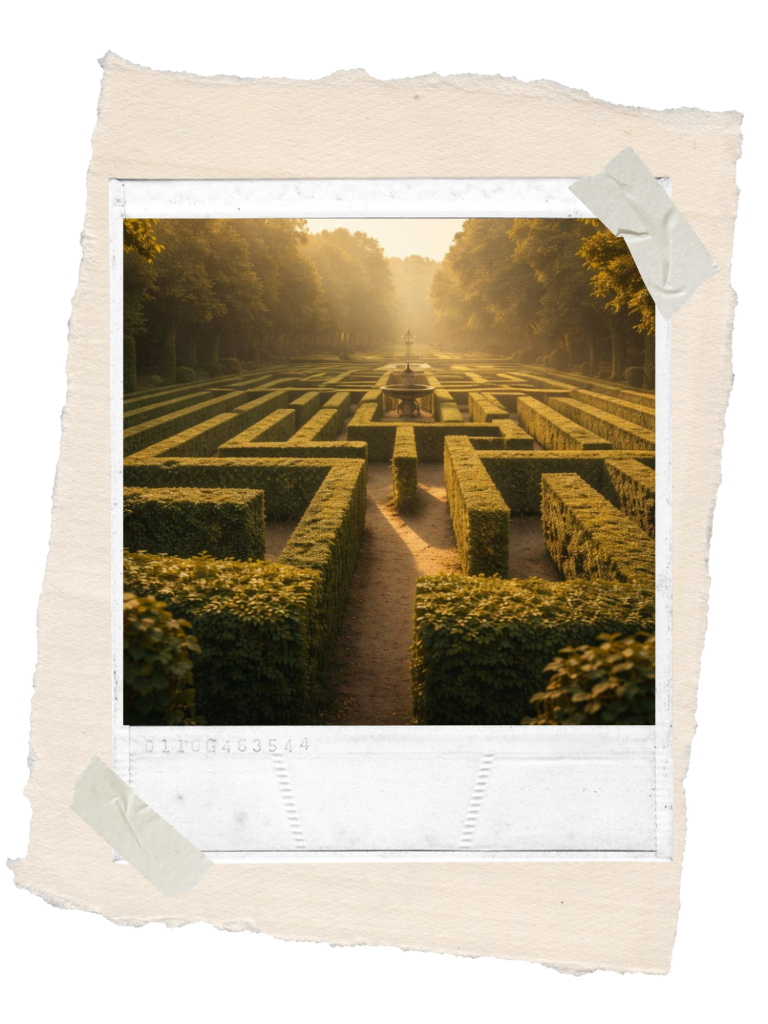
To the visitor, it may first appear as imperial scenery: the palace façade, the Gloriette on the hill, the clipped avenues, the zoo, the maze, the long gravel paths arranged with the confidence of a world that believed order could be designed into landscape.
And of course, that is part of it.
But Schönbrunn has never been only a monument to me.
I first saw it when I was seventeen, during an excursion from Salzburg, where I had come to learn German. I remember seeing the palace as one sees something impressive from a temporary distance. Beautiful, yes. Grand, certainly. But still outside the imagined borders of my own life. I had no idea then that I would one day marry in Austria, live in Vienna, and call the thirteenth district home.
Now Schönbrunn is literally my backyard.
We live less than a ten-minute walk from the perimeter of the Tiergarten. This is where I walk when I need to clear my head. This is where I have learned the seasons, not as calendar entries, but as changes in light, mud, leaves, tourists, silence, and crowd patterns. I know which parts offer refuge and which parts to avoid when the city has handed itself over to tour groups and selfie sticks. I know the difference between Schönbrunn as destination and Schönbrunn as daily landscape.
I cannot point to one dramatic moment when Schönbrunn became home. It happened more quietly than that. Perhaps it happened in autumn, entering through the Hietzing gate, when the crowds had thinned and the park had begun to belong again to footsteps, leaves, benches, and silence. Perhaps it happened when I stopped looking first at the palace and began noticing the cut of the trees, the rhythm of the gravel, the locals sitting on benches with lunch in summer or coffee from a thermos in autumn. At some point, I no longer arrived as someone looking at Schönbrunn. I arrived as someone returning to it.
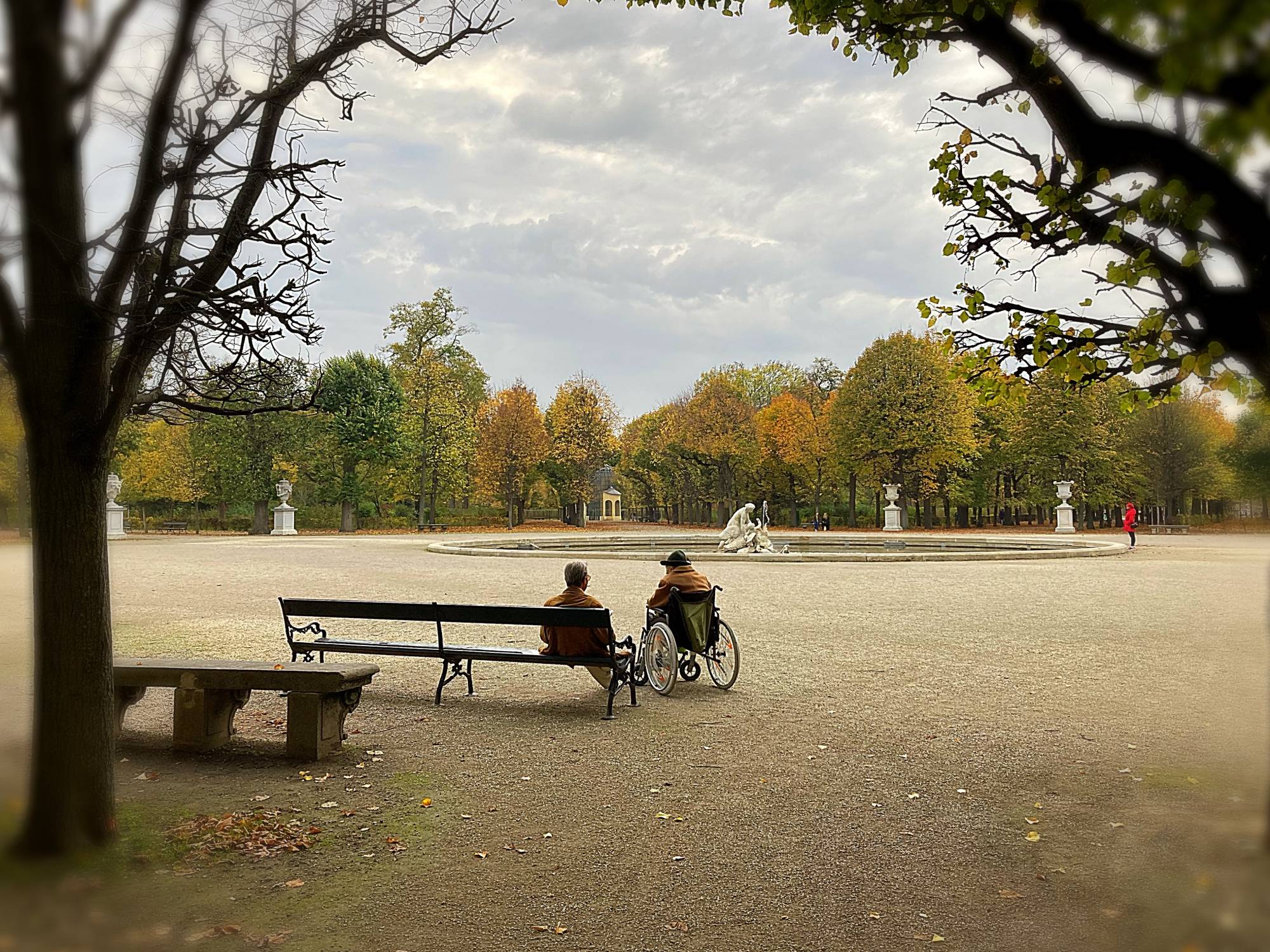
There was one small moment I have never forgotten. I was sitting on a bench in the rose garden, trying to process a private crisis, when a squirrel jumped onto my lap as if reassurance had decided to arrive in the most unlikely possible form. It was absurd, gentle, and completely unforgettable. Schönbrunn has a way of doing that. It remains imperial from a distance, but up close it becomes intimate in ways no palace guidebook can explain.
That difference matters.
To the visitor, Schönbrunn is something to see. To the resident, it becomes something to use, to avoid, to return to, to measure the weather against. To the native Viennese, it may be carried almost casually, as one carries places that have always been there: childhood outings, school trips, Sunday walks, visiting relatives, complaints about crowds, memories folded into habit.
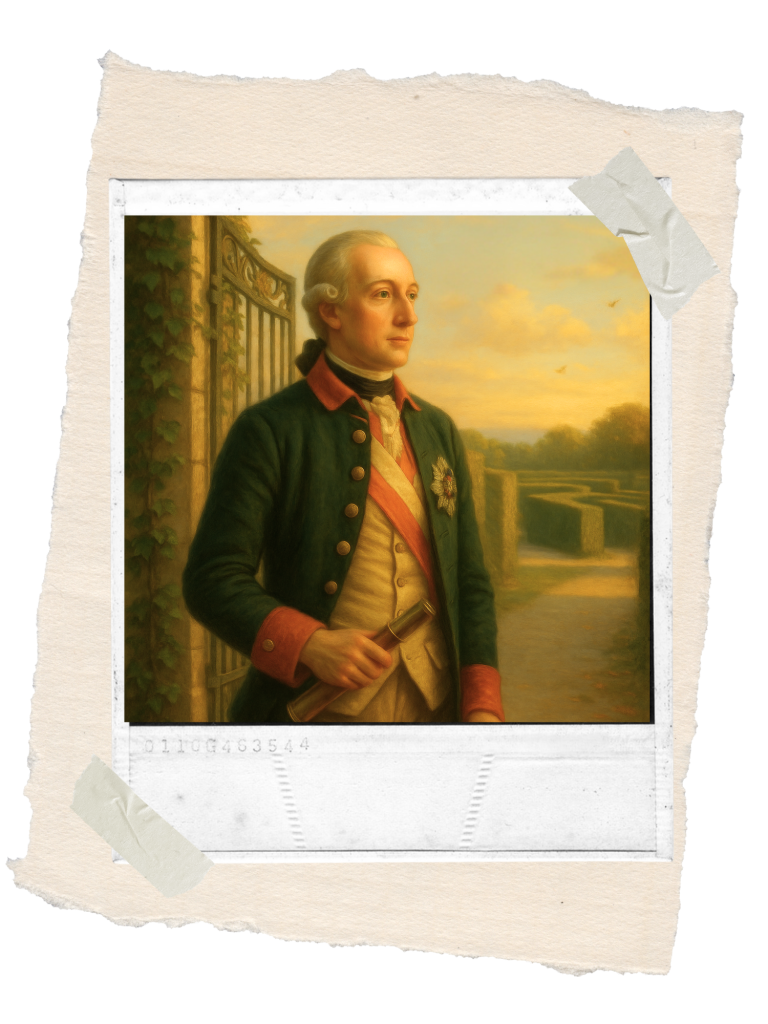
But Schönbrunn also carries a stranger historical rhythm. It began not as the polished palace of imperial imagination, but as hunting ground, retreat, and possibility. It was used, neglected, transformed, loved, inherited, reshaped, rediscovered, commercialised, preserved, and repurposed again. Maria Theresa made it grand. Joseph II, with his suspicion of pomp, did not love it in the same way. Franz Joseph made it central again. Elisabeth experienced imperial life there as something closer to confinement than fairy tale and escaped, as often as she could, into movement.
That history interests me because it mirrors the place itself.
Schönbrunn has always been caught between refuge and display. Between private retreat and public theatre. Between beauty and control. Between the dream of order and the human need to escape it.
In my own lifetime here, I have seen another version of that transformation. Schönbrunn changed from something that still carried the slightly sleepy atmosphere of a state-run palace into a highly managed cultural and commercial venue, with more events, more visitors, more infrastructure, more international visibility. Something was gained. Something was lost. That is usually how it goes, although no one likes to admit it while the ticketing systems are improving.
For Understanding Vienna, Schönbrunn became one of the places where everything began.
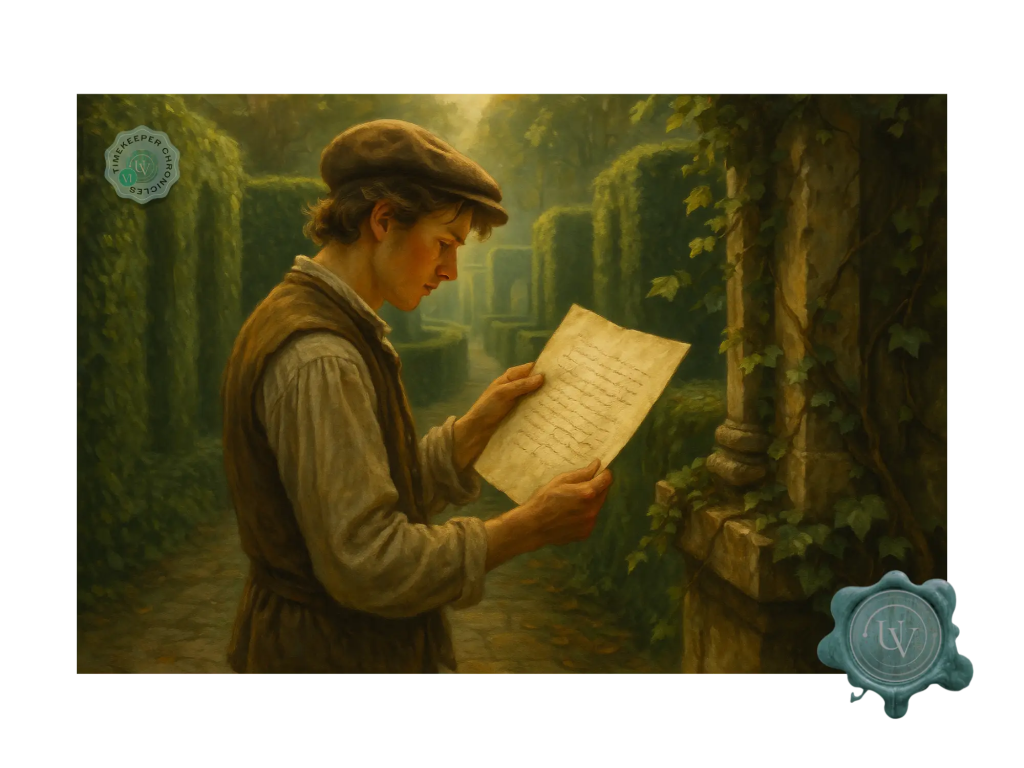
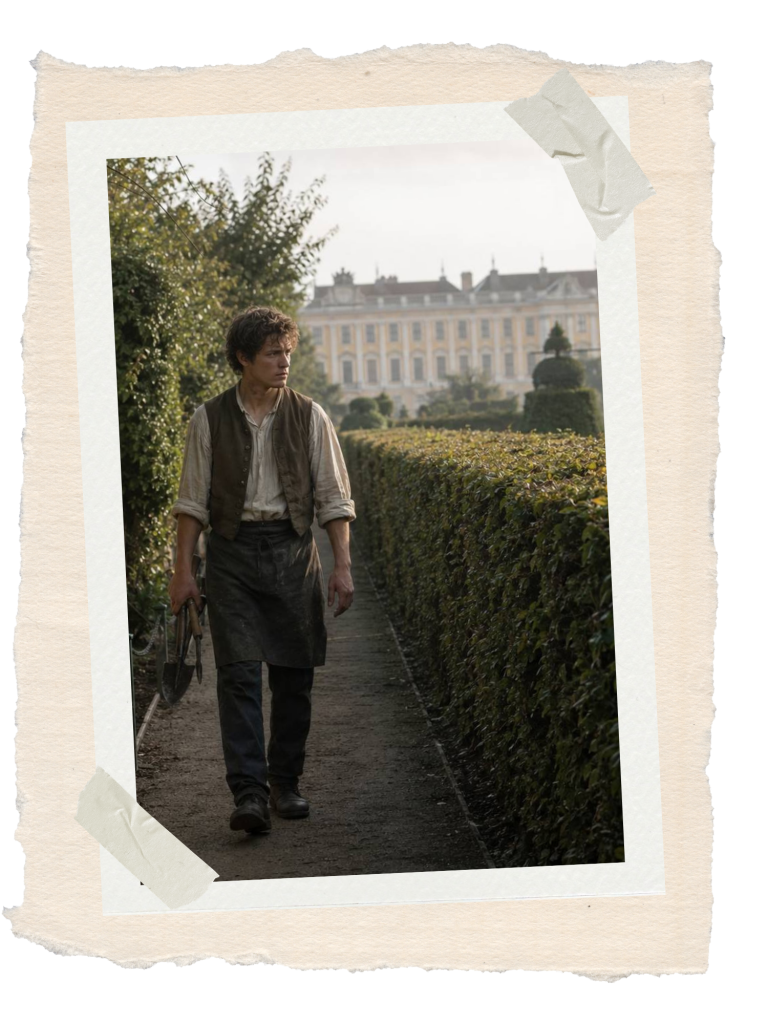
It inspired not only walks and photographs, but writing, art, and eventually The First Whisper, the beginning of a historical fiction world rooted in Schönbrunn, memory, and hidden passage. The maze, the garden paths, the clipped hedges, the sense of hidden passage inside visible order: all of this became part of the imaginative architecture of the series. Schönbrunn offered the physical landscape, but also the deeper question underneath it.
What happens when a place designed for power begins to speak to the private imagination?
That is how Schönbrunn becomes more than Schönbrunn. At first, it is imperial scenery. Then, if one lives close enough, it becomes walking ground, weather gauge, refuge, irritation, habit. For Viennese families, it carries childhood outings, school trips, Sunday walks, and the casual intimacy of grandeur that has always been there. Historically, it carries hunting, monarchy, discipline, neglect, reinvention, imperial family life, public ownership, and modern cultural commerce. For me, it became something more intimate still: the place where home, history, art, and story began to meet.
A garden path is no longer only a path. It becomes a question of freedom and form. A maze is no longer only a visitor attraction. It becomes the shape of a story. A palace is no longer only the residence of emperors. It becomes the backdrop against which one begins to understand how power arranges space, how memory survives reinvention, and how a place can move from postcard to backyard to private mythology.
Schönbrunn is where I learned that a city’s symbols do not remain distant if you live beside them long enough.
Eventually, they begin to follow you home.
That gap is where story lives. It is also where memory lives.
Toward symbolic travel
That is how Vienna becomes more than a city of motifs.
A tram line becomes a broken circle. A coffeehouse becomes an unexpected welcome. The Musikverein becomes inherited listening. Michaelerplatz becomes two thousand years of argument held in one square. Schönbrunn becomes the place where a palace, a garden, a maze, and a private life begin to belong to the same story.
The tourist motif is only the surface. Beneath it are habit, code, history, and the slower inward movement that begins when a place has had enough time to enter us.
That is where storytelling begins.
Not with the question, “What should someone see?”
But with a more difficult and more generous question:
“What might this place awaken?”
People do not come to cities empty-handed. They arrive carrying private weather: family fragments, half-remembered songs, old griefs, unnamed longings, the need for beauty, the ache of not belonging, the wish to find a pattern in what has felt scattered.
A meaningful story world gives those invisible things somewhere to go. It offers doors.
Not one door. Many.
The traveller may enter through history. The reader may enter through mystery. The artist may enter through texture and light. The child may enter through wonder. The homesick person may enter through a street they have never walked and still somehow recognise. The writer may enter through a garden path and find, years later, that the path has become the beginning of a book.
That is what happened to me with Schönbrunn. It began as a place I saw at seventeen, impressive and distant, part of a Vienna I did not yet know would become my life. It became my backyard. Then my walking ground. Then my refuge. Then a place I sometimes avoided because even beloved places can become unbearable when the crowds arrive. And eventually, almost without asking permission, it became part of the imaginative architecture behind The First Whisper and the world of Understanding Vienna.
That is how symbolic place works.
You arrive, thinking you are looking at the city. Then, quietly, the city begins looking back.
Perhaps that is what Vienna finally gave me: not only a city to understand, but a place from which to understand myself. Before Vienna, I was not always sure where I belonged; here, through repetition, memory, and daily return, I found something that felt like home.
It does not give itself fully to the first glance. It waits for repetition, return, attachment, irritation, memory, loss, affection, and time. It waits until the visitor becomes a resident, until the resident begins to read the codes, until history stops sitting politely in the background and begins pressing through the present.
Vienna is not one symbol. It is a field of symbols. It can be imperial and intimate, disciplined and dreamlike, ceremonial and practical, melancholy and radiant in the same afternoon.
And because it contains contradiction, it feels human.
A city that is only beautiful becomes decorative. A city that is only historical becomes educational. A city that is only nostalgic becomes a museum of itself.
Vienna resists that flattening when we approach it properly. It asks for more than admiration. It asks for interpretation.
It asks us to notice the gap between what is displayed and what is carried.
That gap is where story lives. It is also where memory lives.
Memory does not remain obediently inside the mind. It attaches itself to material things: tram routes, marble tables, inherited concert seats, Roman stones under a square, coffeehouse names that disappear and return as echoes, garden paths, hedges, staircases, door handles, the hush before an orchestra begins.
Place carries memory because people have carried their lives through it. They have waited, worked, listened, loved, argued, hidden, returned, escaped, failed, begun again. They have crossed thresholds with hope and dread. They have sat at tables where their lives quietly changed. They have taken children by the hand and taught them how to listen. They have walked the same path in different seasons until the path began to answer back.
Somehow, the places remember.
Not literally, perhaps. But through repetition. Through ritual. Through the pressure of lives lived around them.
And when we enter them with attention, we feel that pressure not as information, but as atmosphere.
This is where tourism begins to become symbolic travel.
Not travel as escape. Not travel as consumption. Not even travel as the careful accumulation of beautiful places.
Symbolic travel begins when we allow a place to mean something. It asks not only what there is to see, but what is asking to be noticed: what has been carried here, what has been lost, preserved, repeated, silenced, inherited, and what in us responds when we stand before it.
Tourism asks, “What is there to see?”
Symbolic travel asks, “What is this place carrying, and why does it speak to me?”
The first question fills a day. The second may change the way we move through the world.
For Understanding Vienna, the city is not a backdrop. It is a living archive of emotional thresholds. A place where history is not only studied, but entered. A place where stories are drawn from the tension between what remains visible and what has slipped beneath the surface.
Because the real question is not only what happened here.
The real question is why it still speaks.
And perhaps that is why some places stay with us long after we leave them. Not because we understood them completely. Not because we saw everything we were supposed to see. But because they touched what we carried.
A longing. A grief. A question. A private memory that suddenly found a tram line, a table, a concert hall, a square, a garden path.
Vienna is full of such encounters.
You arrive thinking you are looking at the city.
Then, quietly, the city begins looking back.

Author note
Yolanda Reischer-Bohanec is the founder of Understanding Vienna. She writes about Vienna as a city of memory, beauty, contradiction, and hidden passage, a place where history is not only studied, but entered.
This essay is part of the emerging Symbolic Vienna series, which reads the city through signs, spaces, rituals, visual memory, and layers of cultural meaning.
Continue the Journey
Read Vienna Beneath the Surface
Receive The Understanding Vienna Field Guide: 7 Ways to Read Vienna Beneath the Surface
and learn 7 ways to notice hidden stories, symbols, thresholds, memory, and the deeper layers of the city.
You’ll also receive occasional Understanding Vienna letters. Unsubscribe anytime.

The Hidden Vienna Post
A future paid literary letter subscription from the quieter rooms of Vienna.
A monthly mail club for readers, travellers, and lovers of hidden places, with seasonal letters, small paper treasures, cultural fragments, and notes from the city’s layered archive.
Vienna as a Symbolic World: Why Place Carries Memory
When Joseph II Opened the Imperial Gardens
The Forgotten Gardeners of Schönbrunn Palace
The Hidden Meanings of the Schönbrunn Maze