
Vienna’s Historical Guide: A Journey Through Time
Discover Vienna’s iconic landmarks, hidden gems, and rich cultural heritage
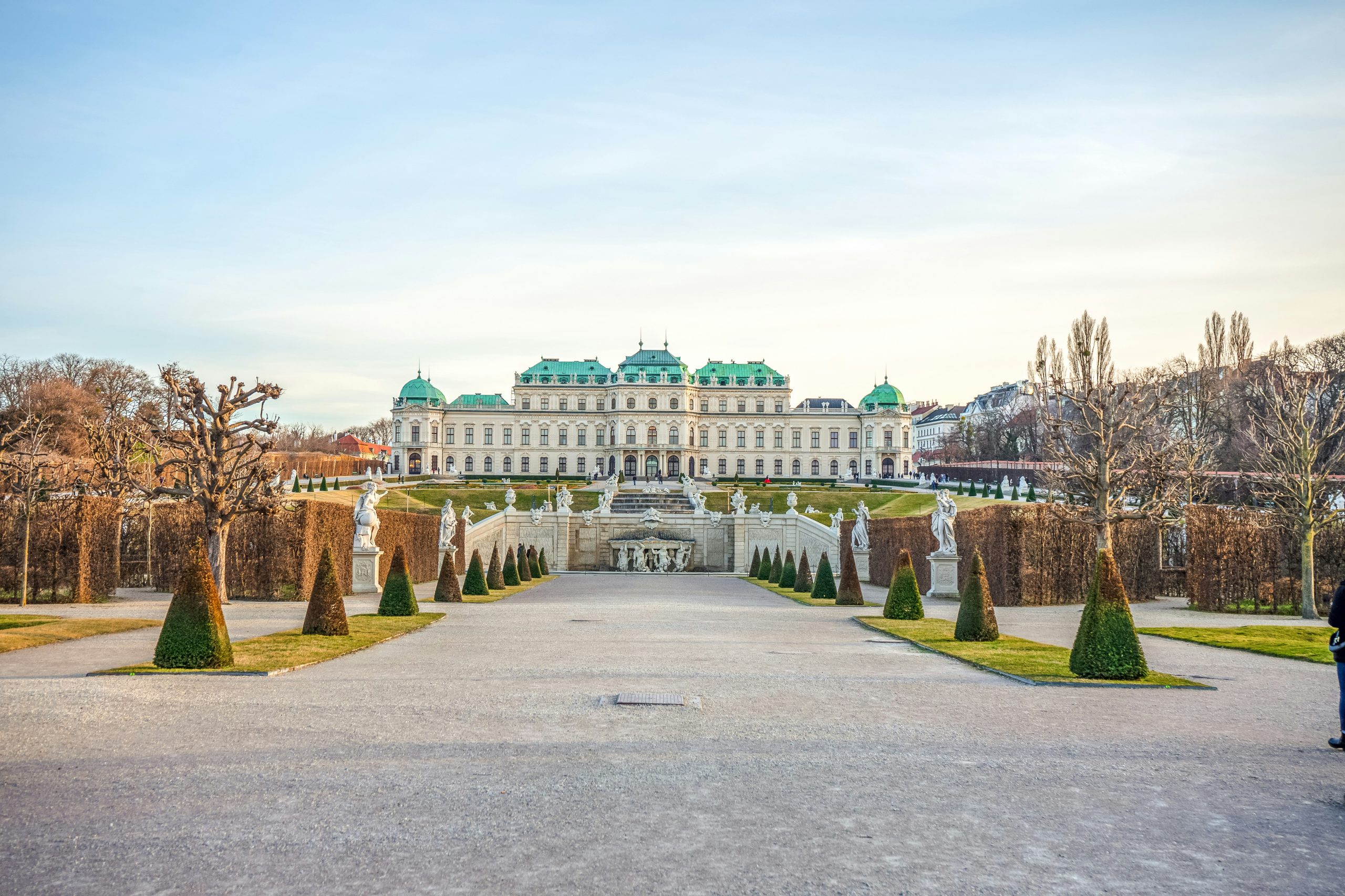
Explore Vienna’s Storied Past
Explore Vienna’s Storied Past
Explore Vienna’s history and immerse yourself in the stories that shaped this remarkable city.
Prehistoric Vienna
CLICK HERE to explore Vienna’s prehistoric roots with the Venus of Langenzersdorf, a figurine dating back to 5000 BC.
Lengyel culture
thrives in the region, leaving behind artifacts like the Venus of Langenzersdorf, a symbol of fertility and craftsmanship.
Venus of Langenzersdorf
Radiocarbon dating places the creation of the Venus of Langenzersdorf, discovered in Lower Austria, near Vienna.
Early Bronze Age
Settlements emerge, with evidence of trade and advanced tool-making in the Vienna basin.
Urnfield Culture
The Urnfield culture dominates, marking the transition to the Iron Age with burial practices and fortified settlements.
Hallstatt Culture
Influences the region, bringing significant advancements in metalworking and trade.
La Tèneculture Culture
(associated with the Celts) flourishes, leaving behind remnants of Celtic life and integrating with early Roman influence.
Roman Vindobona & The Germanic Tribes
CLICK HERE to discover Vienna’s origins as a Roman frontier settlement, Vindobona, established in the 1st century AD.
Roman Military Outpost
Establishment of Vindobona as a Roman military outpost along the Danube frontier (Limes).
Emperor Marcus Aurelius
dies in Vindobona, marking its importance as a Roman provincial center.
Expansion
Vindobona expands, becoming a key site for trade and military operations in the Roman province of Pannonia.
Rise of Germanic Tribes
Vindobona’s fortifications are reinforced as pressure from Germanic tribes increases.
Fall of Roman Vindobona
Roman influence wanes, and the region comes under Germanic control.
Attila the Hun
invades the region as part of his campaign across Europe, further destabilizing the former Roman provinces, including Noricum.
The Langobards
(Lombards) settle in Noricum, eventually migrating to Italy in 568 AD, leaving a mark on the region’s cultural and historical landscape.
Medieval Vienna & Babenberger Dynasty
CLICK HERE to explore Vienna’s rise as a trade hub and cultural center during the Middle Ages.
Wenia
First documented mention of Vienna (as “Wenia”) in the Annals of Fulda, referencing a battle with the Magyars.
Rise of Babenberger Dynasty
The Margraviate of Austria is established under Leopold I of Babenberg, marking the beginning of Babenberg rule and laying the groundwork for Vienna’s rise in significance.
Ostarrîchi
The name “Ostarrîchi” (Austria) is first recorded in historical documents, symbolizing the region’s growing identity under the Babenbergs.
Battle of Krems
The Babenbergs, led by Margrave Adalbert the Victorious, achieve a key victory against the Hungarians near Krems, solidifying their hold over the region and strengthening the Margraviate of Austria.
Construction of St. Stephen’s Romanesque Church Begins
The foundation for St. Stephen’s Cathedral is laid, predating Habsburg control, and establishing Vienna’s growing importance as a religious center.
Vienna Becomes a Babenberg Residence
Duke Henry II Jasomirgott makes Vienna the residence of the Babenbergs, elevating its status as an administrative and cultural hub.
Privilegium Minus Grants Duchy Status
Emperor Frederick Barbarossa issues the Privilegium Minus, elevating Austria to a duchy and giving the Babenbergs greater autonomy.
Completion of St. Stephen’s Romanesque Church
The original Romanesque structure of St. Stephen’s is completed, symbolizing Vienna’s religious and architectural development.
Capture of King Richard the Lionheart
Richard the Lionheart is captured near Vienna by Duke Leopold V of Babenberg, following a dispute during the Third Crusade. His ransom significantly boosts the Babenberg dynasty’s finances and influence.
Civitas – Vienna Granted City Charter
Duke Leopold VI grants Vienna city status and its first municipal charter, establishing it as a major trade hub in Europe.
St. Stephen’s Consecrated as a Cathedral
The Romanesque church is officially consecrated as St. Stephen’s Cathedral, cementing its role as Vienna’s spiritual and cultural heart during the Babenberg era.
End of the Babenberg Dynasty
Duke Frederick II, known as Frederick the Quarrelsome, dies at the Battle of the Leitha River, leaving the Babenberg line extinct and Vienna in political turmoil.
Habsburg Era
CLICK HERE to Uncover the grandeur of Vienna as the heart of the Habsburg Empire, a center of art, music, and diplomacy.
Rise of the Habsburg Dynasty
Rudolf I of Habsburg becomes King of Germany, marking the beginning of Habsburg power in Europe.
Founding of the University of Vienna
Duke Rudolf IV establishes the University of Vienna, making it a center for learning and intellectual thought.
Vienna Becomes Imperial Seat
Vienna becomes the seat of the Holy Roman Empire, solidifying its importance under Habsburg rule.
Construction of St. Stephen’s Cathedral
Significant Gothic expansions, including the iconic South Tower (Steffl), occur during the Habsburg era, establishing the cathedral as a symbol of Vienna’s imperial and religious prominence.
First Ottoman Siege of Vienna
The city successfully defends itself against the Ottoman Empire, marking a turning point in European history.
Division of the Habsburg Dynasty
Emperor Charles V abdicates, splitting the Habsburg dynasty into Austrian and Spanish branches, with Vienna as the Austrian center.
The Thirty Years’ War
Vienna serves as a stronghold for the Catholic Habsburgs during one of Europe’s most devastating conflicts.
Expansion of the Hofburg Palace
The Hofburg Imperial Palace undergoes significant expansion, symbolizing Habsburg grandeur.
Second Ottoman Siege of Vienna
The decisive victory over the Ottoman Empire solidifies Vienna’s position as a major European power.
Pragmatic Sanction
Emperor Charles VI issues the Pragmatic Sanction to secure Maria Theresa’s succession, unifying the empire under her rule.
Construction of Karlskirche Begins
The magnificent baroque church is commissioned by Emperor Charles VI as a symbol of divine protection after the plague.
The Reign of Maria Theresa
Maria Theresa implements reforms in governance, education, and culture, strengthening Vienna’s prominence.
Mozart’s First Performance
Wolfgang Amadeus Mozart performs in Vienna as a child prodigy, reinforcing Vienna’s reputation as a musical capital.
Founding of the Austrian Empire
Emperor Francis II establishes the Austrian Empire, officially designating Vienna as its capital.
Dissolution of the Holy Roman Empire
Francis II dissolves the Holy Roman Empire, marking the end of an era in European history.
Congress of Vienna
This landmark diplomatic conference redraws Europe’s borders and solidifies Vienna’s role as a center of international diplomacy.
European Revolutions
Political upheavals across Europe lead to significant social and political changes within the Habsburg Empire.
Construction of the Ringstrasse
The demolition of Vienna’s medieval fortifications makes way for the grand Ringstrasse boulevard, symbolizing Vienna’s modernization.
Formation of Austro-Hungarian Empire
The Austrian Empire transforms into the Austro-Hungarian Empire, further elevating Vienna’s status as a cultural and political hub.
Founding of the Vienna Secession
Gustav Klimt and other artists establish the Vienna Secession, heralding a new era of modern art and cultural innovation.
End of the Habsburg Era
The Austro-Hungarian Empire collapses following World War I, concluding centuries of Habsburg rule and reshaping Vienna’s future.
Modern Era
CLICK HERE to witness Vienna’s resilience through wars, reconstruction, and its emergence as a modern metropolis.
World War I
World War I leads to the collapse of the Austro-Hungarian Empire in 1918, marking the end of the Habsburg monarchy.
New Republic
Vienna becomes the capital of the newly established Republic of Austria.
Anschluss
Austria is annexed by Nazi Germany, significantly altering Vienna’s cultural and political landscape.
End of World War II
Vienna is heavily bombed and divided into four occupation zones by Allied forces.
“Österreich ist frei!“
The Austrian State Treaty is signed, restoring Austria’s sovereignty and declaring the country’s neutrality.
V.I.C.
Opening of the Vienna International Centre, establishing Vienna as a hub for international diplomacy.
Fall of the Iron Curtain
Vienna re-emerges as a central player in European integration.